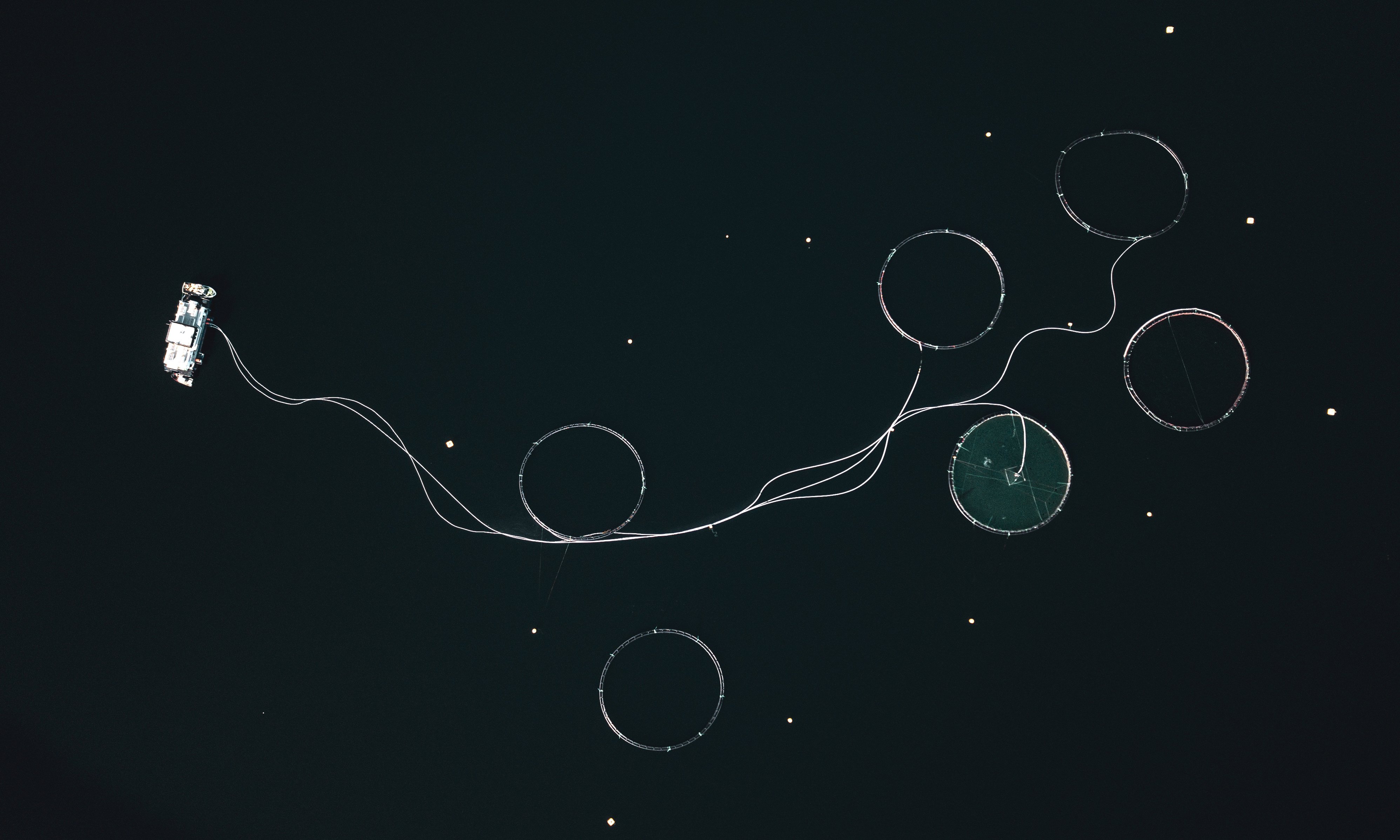
One connected foundation for aquaculture intelligence.
Aquaculture data lives across production, feeding, fish health, environmental, laboratory, treatment, and operational systems. Each captures a different part of what is happening.
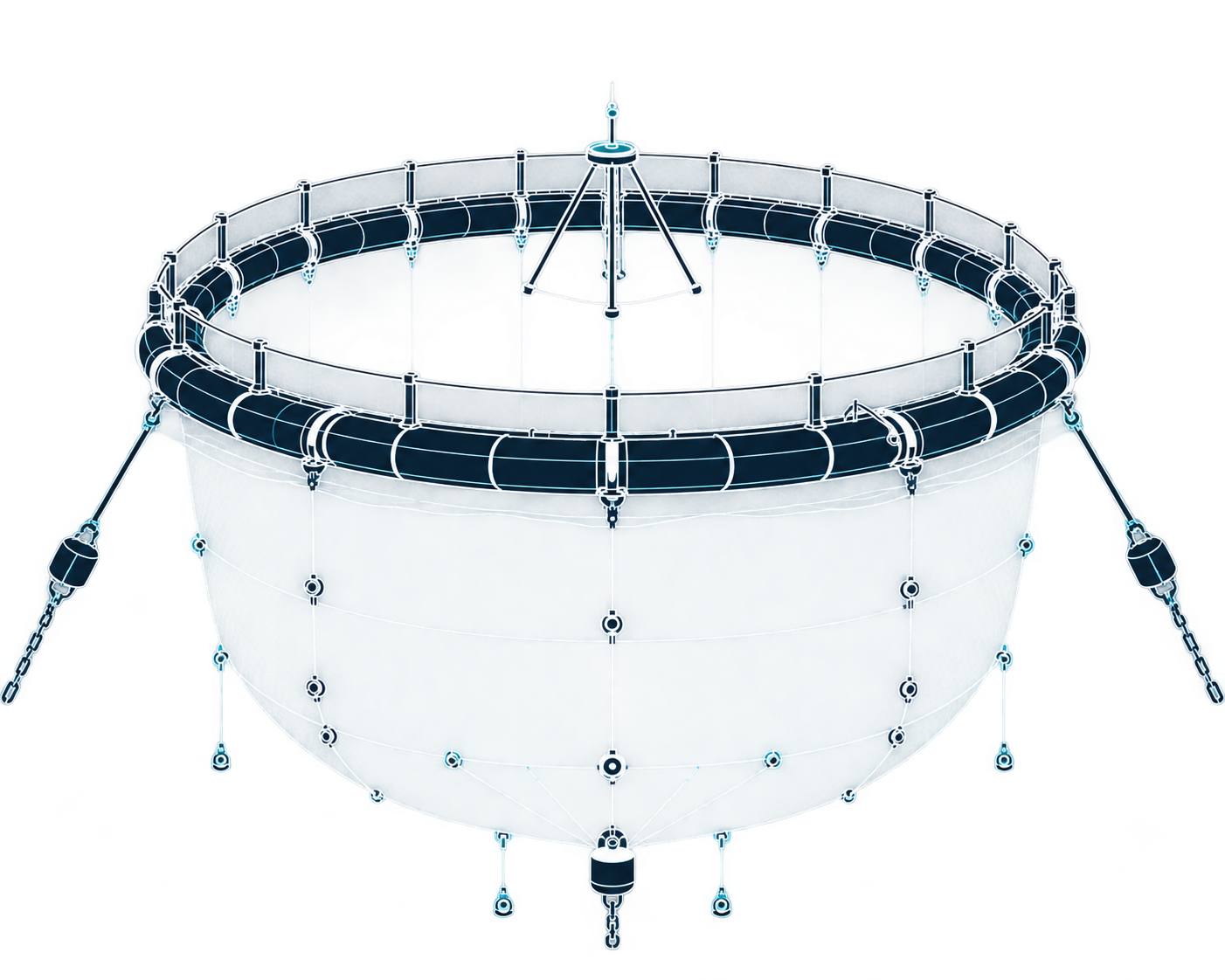

Manolin brings those sources into the data network—standardizing, normalizing, and cleaning records while preserving the aquaculture-specific context needed to make them usable together.
That connected foundation powers the models and analysis behind Watershed and Harpoon—and makes structured aquaculture data available through the API for teams building their own analytics and intelligence.

Models and analysis for farm operations, biological performance, and population-level investigation.

Structured field evidence for understanding where products perform and what influenced the outcome.

Structured aquaculture data with preserved context for custom analytics, applications, and intelligence.
Population Tracing
Manolin's population tracing algorithm gives our models and analysis a continuous biological record across production cycles throughout the Manolin network.
Manolin’s differentiation starts underneath our software. The platform preserves the biological history behind the data, then applies aquaculture-specific analysis to questions that are otherwise difficult to answer reliably.
Integrate production, feeding, environmental, health, laboratory, and operational records without requiring a new hardware layer.
Link data to traceable populations rather than temporary cage locations as fish are split, merged, transferred, and moved.
Evaluate performance with the conditions, interventions, and prior events that shaped the population outcome.
Give farm and supplier teams a clearer path from a detected change to the next investigation, report, or decision.
Use research, technical articles, and field analysis to reinforce why coherent aquaculture intelligence requires more than a generic analytics layer.
Architecture // 01
Why aquaculture intelligence depends on the structure beneath the interface.
Biological data // 02
Why operational comparisons lose meaning when fish history is fragmented.
Infrastructure // 03
The foundation required before AI tools can produce reliable aquaculture answers.
Data insights, technical analysis, and industry developments from Manolin.
Technical answers for teams evaluating Manolin.
No. Watershed works with the systems and data sources already used across your operation. Manolin sits across that existing environment, connecting and structuring the data for analysis rather than requiring a new hardware layer or replacement production system.
Manolin brings records from production, feeding, fish health, environmental, laboratory, treatment, and operational systems into a common aquaculture-specific data structure so they can be analyzed together.
Population Tracing is Manolin’s algorithm for maintaining a continuous biological record across production cycles. That record gives our models and analysis the population-level history needed to interpret health, performance, interventions, and outcomes in context.
Data warehouses and BI platforms are designed to store, organize, and visualize data. Manolin is built specifically for aquaculture: structuring fragmented production data, preserving biological relationships, and preparing that information for population-level modeling and analysis.
Manolin can work across biological, environmental, operational, health, feeding, treatment, laboratory, and other relevant production data. The exact combination depends on the question being analyzed and the data available.
Yes. Manolin can provide structured aquaculture data through API access for organizations that want to use it within their own analytics, applications, reporting, or internal workflows.
Yes. Manolin’s platform is species agnostic and is designed to work across aquaculture species. We already work with production data from species including salmon, trout, king salmon, sea bream, and barramundi.